Ask why a home near Bde Maka Ska costs nearly double one near Lake Nokomis, and most people give the same answer: the lake. It's a reasonable guess. Both neighborhoods sit inside Minneapolis's Chain of Lakes system, both promise a walk to water, and both show up on every list of the city's most livable pockets. But the lake isn't what buyers are actually paying for, and the data from 2026 makes that case pretty clearly.
Nokomis, as it turns out, touches more parkland than Linden Hills does. Lake Nokomis Park runs past 400 acres and serves the Diamond Lake, Hale, Keewaydin, and Wenonah neighborhoods with beaches, sailing access, ballfields, and the winter home of the U.S. Pond Hockey Championships. Linden Hills, by contrast, only brushes the edges of Lake Harriet and Bde Maka Ska, a block away in one direction and two blocks the other way. If lake access alone set the price, Nokomis should be the pricier address. It isn't close.
The Numbers Behind the Question
In February 2026, the median sale price in Linden Hills was $700,000, up 7.3% from a year earlier, with homes averaging 52 days on the market. That's actually faster than the 63 days homes took in February 2025, so the neighborhood has sped up. But 52 days is still slower than Minneapolis overall, which is worth sitting with for a moment before moving on. By early August 2026, Redfin's trailing monthly figure for Linden Hills had shifted to an average price closer to $538,000. With only 23 to 24 homes selling most months in the neighborhood, one or two unusual sales can swing that number substantially. Linden Hills is a thin market, and its median price should be read as a range rather than a fixed fact.
Nokomis prices sit in a different neighborhood entirely, clustering near $358,000 as of early August 2026. That's roughly half of Linden Hills's February median, for a neighborhood with more total park acreage and comparable water access.
Citywide, Minneapolis homes were selling in 44 days as of June 2026 figures, with 1.56 months of supply and sale prices averaging 101% of list. Local market data typically treats under 45 days as a seller's market and 45 to 70 days as balanced. Linden Hills, at 52 days, sits inside that balanced range despite commanding roughly double the city's median price. That gap between price and pace is the detail worth understanding before you decide which neighborhood fits.
Why One Village Corner Costs So Much
The premium in Linden Hills traces back to a few blocks around 43rd Street and Upton Avenue South, a commercial node that has stayed remarkably fixed in both size and character. Wild Rumpus, the neighborhood's independent bookstore, has operated from the same corner since 1992. Sebastian Joe's ice cream shop anchors the same short stretch. In 2019, when a developer wanted to build a three-story building on the surface parking lot just south of Sebastian Joe's, the city had to grant a variance to the neighborhood's 2.5-story height limit just to make the project work, and it moved forward with almost no public pushback, unlike other proposals nearby.
That detail is the mechanism behind the price. Linden Hills isn't really selling square footage of shoreline. It's selling walking distance to a small, essentially capped set of storefronts that has resisted turnover for decades. There are only so many blocks that qualify as a five-minute walk from Wild Rumpus, and the height limit means that number isn't growing quickly. Scarcity like that shows up in price whether or not it shows up in a listing description.
What Nokomis Buys Instead
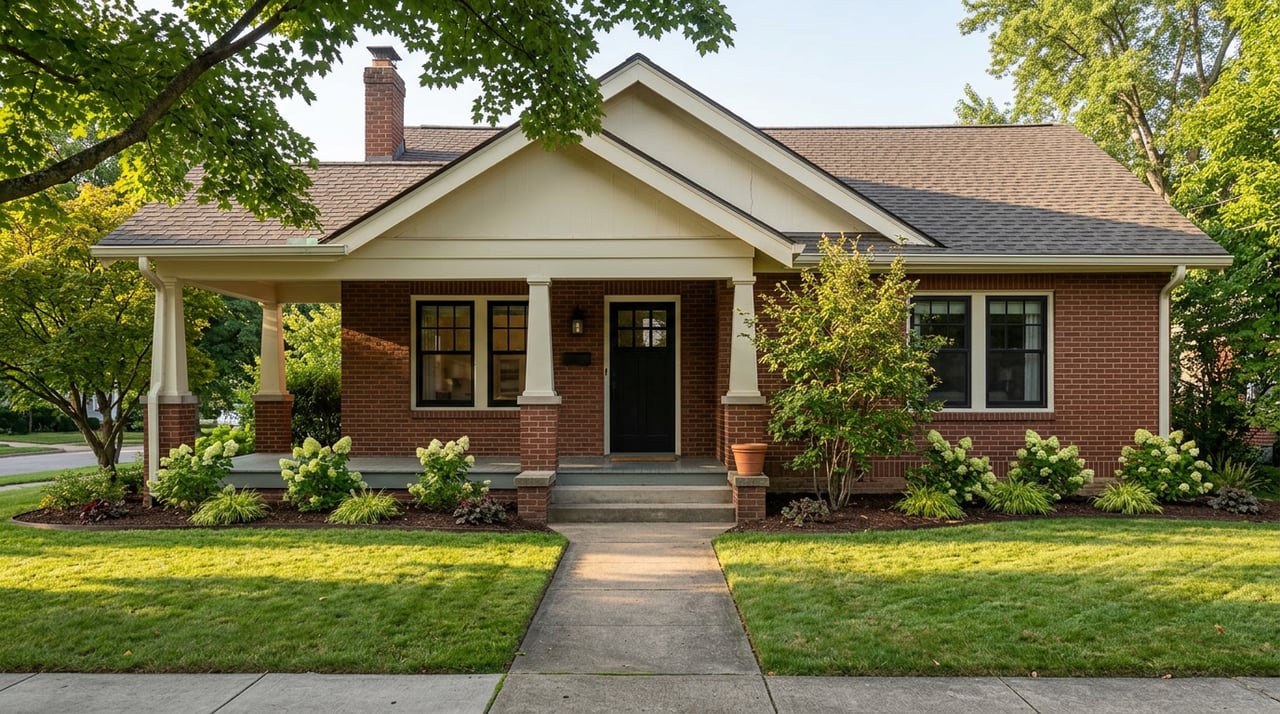
Once you see why Linden Hills costs what it costs, Nokomis's price makes sense too, and it has nothing to do with a shortage of amenity. Nokomis isn't one village node. It's a stretch of eleven distinct sub-neighborhoods, including Keewaydin, Wenonah, Hale, and Field, spread across a much larger footprint that borders both Lake Nokomis and Lake Hiawatha. The housing stock runs roughly 1920s through 1950s bungalows and Tudors on quiet residential blocks, and there's simply more of it. More total inventory spread across a wider area means more homes competing for the same pool of buyer dollars, which keeps the per-home price down even where the park access is arguably better.
The tradeoff is retail density. Nokomis's shops and restaurants sit scattered across its sub-neighborhoods rather than concentrated in one walkable strip, so daily errands lean more on a short drive than a five-minute walk. For a lot of buyers that's a non-issue, maybe even a preference. For someone who has priced Linden Hills's walkable village into their decision without quite naming it, that's the actual thing they'd be giving up by choosing Nokomis, not lake access.
The Twist in the Days-on-Market Data
Here's where the numbers get genuinely useful for anyone about to transact rather than just compare neighborhoods on paper. A 52-day average in Linden Hills sounds unremarkable until you set it against the price tag. Homes at $700,000 that take longer to sell than the city's roughly $370,000 median aren't failing to attract interest. They're drawing from a much smaller pool of qualified buyers by definition, since fewer households can carry that price point comfortably, and a thin buyer pool takes longer to clear even when demand per buyer is intense.
That has a direct planning consequence for both sides of a transaction. A seller listing in Linden Hills should expect a longer runway than the neighborhood's reputation suggests, and should price and stage the home with that runway in mind rather than assuming the address alone will move things quickly. A buyer targeting Nokomis, on the other hand, is competing in a faster, larger pool at a lower price point, which usually means less time to deliberate once the right house appears and more pressure to have financing and a decision framework ready before the showing.
Choosing Between Them
For a move-up buyer or someone easing into a smaller footprint, the honest version of this choice isn't lake versus no lake. Both neighborhoods deliver real water access that most Minneapolis addresses simply don't have. The real choice is between a small, walkable commercial core with limited room to grow and a larger, quieter footprint with more total park acreage and more house for the money. Neither is the better answer on its own. They're different answers to different priorities, and the price gap between them reflects that difference rather than any shortcoming in either place.
A Few Questions Worth Settling First
Is Nokomis actually lake-adjacent, or is that a stretch? It borders both Lake Nokomis and Lake Hiawatha directly, with the Minnehaha Parkway trail connecting the two. The lake access is real. It's the commercial density around it that differs from Linden Hills, not the water.
Does a longer days-on-market average in Linden Hills mean sellers should price lower? Not automatically. It means the marketing timeline and buyer pool look different than they do citywide, and a pricing strategy built around a 20-day sale expectation will misread the market. Working from actual comparable timelines for the specific price bracket matters more than leaning on the neighborhood's general reputation for speed.
Should a buyer expect the price gap between the two neighborhoods to close over time? Nothing in the current data points that direction. Linden Hills's retail footprint is capped by zoning, and that scarcity has held for years. Nokomis's larger geographic footprint isn't changing either. The gap reflects two structurally different neighborhoods rather than a temporary mispricing that will correct itself.
Comparing two lake neighborhoods on paper only gets a buyer so far. The right fit depends on what a household actually does on a Tuesday evening, not just what shows up in a listing photo. If you're weighing Linden Hills against Nokomis, or trying to figure out where else in Minneapolis fits the way you actually want to live, Mitchell Culbreath can walk through the tradeoffs with you and help you price a move with a clear head. Let's Connect.