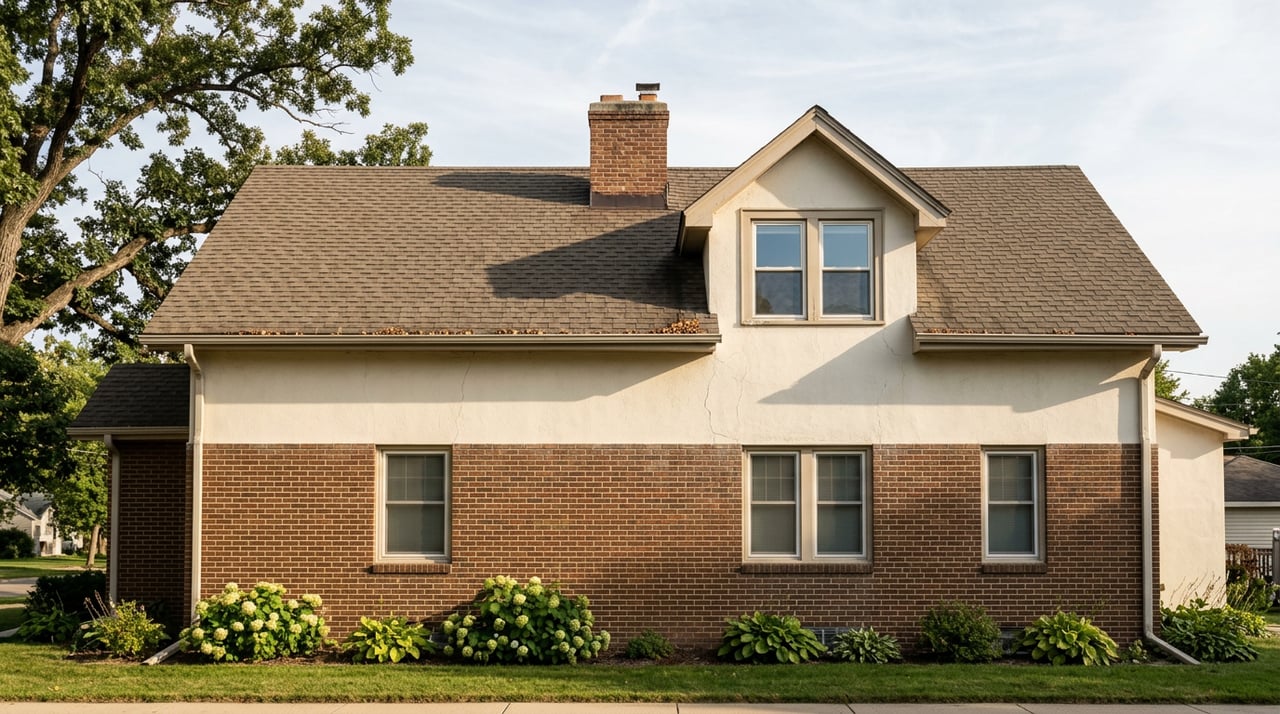
A seller preparing to list a 1920s bungalow in Lowry Hill calls a licensed evaluator, expects a routine walkthrough, and gets a report listing three items that must be fixed before the house can go under contract: a missing hard-wired smoke detector, an ungrounded outlet near the kitchen sink, and a chimney liner that no longer meets code. Two miles away in St. Paul, a seller with a nearly identical home gets an evaluator who checks for exactly one thing that legally has to work. Everything else on the St. Paul report is informational.
Both sellers just went through something called a Truth in Sale of Housing evaluation. Both cities call it TISH. The two experiences are not the same, and the gap between them is the kind of detail that surprises people who assume a shared name means a shared rulebook.
What Minneapolis Actually Requires Before You Can Show the House
If you're selling a single-family home, duplex, townhouse, or first-time condo conversion in Minneapolis, the city requires a licensed evaluator to inspect the property and file a disclosure report before you can advertise it, put up a sign, or let a buyer walk through. That evaluation has to happen within three days of the property going on the market, and the report has to be on display at the house during showings.
The report itself is public. Anyone can look up a Minneapolis address on the city's property information site and see whether a valid TISH report or Certificate of Approval already exists for it, which matters if you're buying a house that changed hands recently.
Once the evaluator finishes, the report is good for two years or one sale, whichever comes first. That two-year window is longer than it sounds like it should matter, but it's the reason some sellers discover a report from a previous owner has already expired by the time they're ready to list. If it has, you start over with a fresh evaluation. There's no updating an old one.
In neighborhoods dense with early-1900s four-squares, bungalows, and duplex conversions, like Uptown, Lyn-Lake, and ECCO, the evaluation tends to surface a familiar set of issues: remnants of knob-and-tube wiring in the attic, boilers approaching the end of their service life, missing GFCI or AFCI protection in kitchens and basements, and chimney liners that predate current code. None of that is a reflection on the house. It's a reflection on when it was built, and Minneapolis holds an estimated 70,000 pre-1940 housing units concentrated in neighborhoods such as Lowry Hill, Prospect Park, Kenwood, and Northeast Minneapolis.
The Repair Obligation Nobody Mentions at the Open House
Here is the part that catches sellers off guard. In Minneapolis, if the evaluator flags something as a health or safety hazard, it doesn't stay a suggestion. The ordinance gives you two paths. You fix it and have it reinspected, or you sell the house with the item still open and the buyer formally takes over the obligation.
That second path has its own paperwork. The buyer signs an Acknowledgement of Responsibility, submits it to the city within one business day of closing, and has 90 days to complete the repair. If nobody follows through, the city's own program materials note that noncompliance can be enforced through mandamus, injunction, or misdemeanor charges. That's not a scare tactic. It's what's written into the process for buyers who take over unfinished repair items and then let them sit.
This is why a Minneapolis listing timeline benefits from ordering the TISH evaluation early, not the week you want to go live. If the report comes back clean, you've lost nothing. If it flags something, you have room to either fix it on your schedule or have an informed conversation with your agent about how to price and disclose it rather than discovering it during a showing week.
Where St. Paul Draws the Line Differently
Cross the river and the same three letters mean something narrower. St. Paul's TISH report is explicitly labeled disclosure only. The evaluator still walks the house and files a report, and the report still has to be available to buyers before they sign a purchase agreement, but the ordinance only forces one repair: a working hard-wired smoke detector in single-family homes. If that's missing, the seller gets a letter from the city's electrical inspector and has to hire a licensed electrical contractor to install one under permit. Everything else the evaluator notes gets disclosed, not mandated.
St. Paul's reports are also shorter-lived than Minneapolis's. A valid report is good for one year, and if a closing happens after that report's expiration date, the rule allows the sale to proceed without a new one only if the offer was made within that same 365-day window. Miss that window and you're scheduling a new evaluation.
Evaluators in both cities are licensed separately, and the license doesn't cross over. A St. Paul-licensed evaluator can't perform a Minneapolis TISH and vice versa. St. Paul has also posted that details on its next evaluator licensing exam, the process by which new evaluators get certified to work in the city, will be available at the end of October 2026, which gives a sense of how actively the program is still being administered rather than left on autopilot.
Here's the comparison side by side:
| Minneapolis | St. Paul | |
|---|---|---|
| Report valid for | Two years, or one sale, whichever comes first | One year |
| What must actually be fixed | Any item flagged as a health or safety hazard, unless the buyer formally takes over the obligation | A working hard-wired smoke detector, and only that |
| Timing | Evaluation completed within three days of listing, before any showing | Evaluation completed before the property is marketed |
| If repairs go unfinished | Buyer signs an Acknowledgement of Responsibility within one business day of closing, completes repairs within 90 days | Not applicable, since the report is disclosure only outside the smoke detector requirement |
| Noncompliance | Can be enforced as a misdemeanor | Also enforceable as a misdemeanor under city code |
What This Means If You're Selling an Older Home
None of this is a reason to worry about listing in Minneapolis. It's a reason to sequence things in the right order. If your home is in one of the city's older pockets, ask your evaluator directly what tends to get flagged in houses of that era on that block, since a prewar four-square in Kenwood and a duplex conversion in Uptown rarely have the same list of concerns. Local evaluators typically charge somewhere in the neighborhood of $200 to $350 for a single-family evaluation, with reinspection fees running $50 to $100 if you fix something and need it signed off.
If your house carries a local historic designation, which is true for parts of Lowry Hill, factor in one more layer. Exterior repair work identified during a TISH evaluation may need Heritage Preservation Commission review before a permit is issued, and that review adds time you'll want to build into your listing schedule rather than discover mid-transaction.
It's also worth remembering what a TISH evaluation doesn't cover. Minneapolis's own guidance notes that asbestos, lead-based paint, formaldehyde, and radon fall outside the scope of the evaluation itself. A TISH report tells you about the structure, the systems, and safety hazards an evaluator can observe. It's not a substitute for radon testing or a buyer's own independent inspection, and buyers in both cities are free to hire their own inspector on top of the city's report.
If you're coordinating a sale in one city with a purchase in the other, which is common for Twin Cities sellers moving between neighborhoods, don't assume the paperwork rules transfer. A report that satisfies St. Paul's requirements won't substitute for a Minneapolis evaluation, and the repair obligations you'd face selling in Minneapolis simply don't exist in the same form across the river.
A Few Questions Worth Settling Early
Does a TISH report replace a buyer's own home inspection? No. Both cities note that a buyer's private inspection is a separate, optional transaction. The TISH report is a city-mandated disclosure, not a substitute for due diligence.
Can I schedule the TISH evaluation before I've decided on a listing date? Yes, and in Minneapolis it's often the smarter move. Ordering it early gives you time to address anything flagged without compressing that work into the same week you want photos and showings underway.
What if the previous owner already has a TISH report on file? Check its age and status first. In Minneapolis it's valid for two years or one sale, and in St. Paul, one year. If it's expired or tied to a prior sale, you'll need a new one before you can list.
Selling a house is already a logistics problem before you add city ordinances to it. Knowing which rules actually apply, and which ones only sound like they do, is the kind of groundwork that keeps a Minneapolis or St. Paul listing on schedule instead of stalling in week two. If you're weighing the timing of a Minneapolis sale, or trying to line one up against a purchase across the river, Mitchell Culbreath can help you map out what your specific property and neighborhood are likely to require before it ever hits the market. Let's Connect.